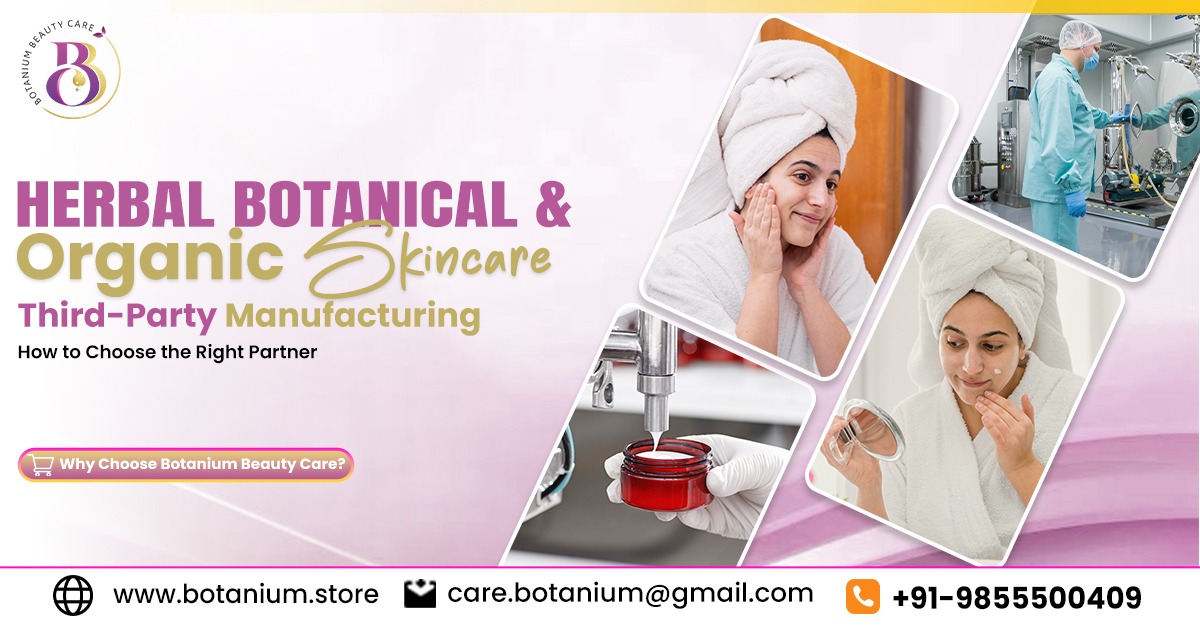
The global beauty market is seeing a massive shift to clean, plant-powered, sustainable products. Consumers today don’t just read the front of a jar. Rather, they flip it over and read every ingredient.
They choose herbal or Ayurvedic products on the basis of ingredients such as cold-pressed seed oils, pure botanical extracts and bioactive plant compounds. They steer clear of harsh sulphates, synthetic parabens and artificial dyes. This shift opens up a huge business opportunity to start an eco-friendly beauty brand.
But establishing a cosmetic manufacturing plant from the ground up involves huge financial investments. You also need specialised teams of chemists and complex regulatory clearances. That’s why most entrepreneurs prefer working with a herbal skincare third-party manufacturer.
When you team up with seasoned Herbal Skincare Third Party Manufacturing experts, you can save your time and money for brand recognition and marketing, with the help of an experienced certified manufacturer who takes care of batch formulation, sourcing, and lab testing.
Why Herbal Skincare Third Party Manufacturing Has Become a Preferred Route
Setting up your own factory costs crores. You need machines, licences, and trained staff. Most new skincare brands skip that step. So do many established ones. What they need is a partner who already owns the machines. One who holds the right licences. One who knows herbal formulas inside out.
That's what third-party manufacturing offers.You bring the brand vision and the marketing plan. Your partner brings the production line, the raw material network, and the paperwork. This has made third-party manufacturing a standard route when it comes to launching new brands. Apart from D2C skincare brands, professionals like dermatologists use it to launch their products.
- • You don't need to set up a factory or secure licenses. Your manufacturer will already have these essentials in place.
- • You can get quality products manufactured while working with a WHO-GMP partner.
- • You can launch your products faster.
What "Herbal, Botanical, and Organic" Actually Mean
Before you approach a third-party cosmetic manufacturer in India, you need to have a clear idea about your product identity. These three words get mixed up in marketing. On a factory floor, they mean different things. Here is how they are different from each other.
Herbal Skincare:
Herbal skincare uses plant extracts and traditional Ayurvedic ingredients as active components. Think neem, tulsi, manjistha, or ashwagandha doing the actual work in the formula.
Botanical Skincare:
In botanical skincare, the manufacturer use extract from flowers, roots, and leaves. India has a booming botanical skincare market.
Organic Skincare:
Organic skincare aims to use raw ingredients. However, these ingredients must be cultivated without pesticides or fertilizers. The finished product usually carries a certification mark from a recognised body to back that claim up.
What Factors to Check Before You Sign a Third-Party Cosmetic Manufacturer in India?
Regulatory Certifications and Compliance
How to make sure that the manufacturer you choose follows quality manufacturing practices? In this scenario, look for the certifications given below:
• WHO-GMP (Good Manufacturing Practices):
It shows that the manufacturer has clean conditions, consistent batch processing, and controlled contamination levels. • ISO 22716 / ISO 9001: It shows that the manufacturer follows international quality management standards.
• AYUSH License:
It is important for businesses dealing with Ayurvedic or herbal formulations in India.
• CDSCO Approvals:
It is issued by the state licensing authorities.
Experience
Specialised technical knowledge is required to handle fresh plant extracts, essential oils and herbal infusions. Natural plant ingredients are not like synthetic chemicals. They can vary in colour, smell and viscosity, depending on when they are picked in a specific season. A well-established botanical skincare manufacturer in India knows how to standardise plant extracts so that every batch works consistently, without oxidising or separating.
Minimum Order Size and Growth Room
New brands rarely need bulk-only volumes. Ask about the minimum order size early. Ask if it can be flexible for a first batch, then grow once your product proves itself. A rigid “minimum” can trap a new brand. You may end up with stock that can remain unsold for months.
Packaging
Packaging also impacts the potency of the herbal products they contain. For example, airless pumps suit actives that oxidise. Amber glass is ideal for oils that fade in light. Recyclable cartons are the right fit for green-minded brands. A good third-party cosmetic manufacturer in India will guide these choices. They protect your formula and back up your brand story. They won't just hand you a plain jar catalogue.
The Source of Raw Material
Herbal actives vary in strength based on where they're grown. A partner with direct grower links, or at least clear supplier records, gives you steady batches. Ask where the neem oil, aloe pulp, or rose extract really comes from. Also, ask if the supplier can show a test report for each batch.
Testing and Batch Records
Each batch should pass microbial checks, stability tests, and pH checks first. Ask to see a sample test report. If a partner won't share one, that says a lot. Their internal checks likely aren't as strict as they claim.
Cost and Pricing Transparency
Cheap isn't always cheap in the end. A low quote from a third-party cosmetic manufacturer in India can hide thin margins on real actives. Ask for a full cost breakdown. Raw material cost, packaging cost, testing cost, and the manufacturing fee should all sit on separate lines. A fair organic skincare manufacturer in India will show you this without pushback.
What Questions to Ask an Organic Skincare Manufacturer in India Before You Commit?
Get clear answers to these before you sign anything. • How long from formula approval to first delivery? • Can they share names of other herbal or organic brands they've worked with? • If a batch fails testing, who pays for it? • Will they tweak the formula after launch, if the market asks for it? • Is the deal exclusive to you, or could a rival get the same formula?
Botanium Beauty Care: Third-Party Manufacturing Built Around Botanical Formulations
Based in Mohali, Punjab, Botanium Beauty Care has built formulas around botanical extracts and dermatologically tested actives. Our wide range covers serums, face wash, moisturisers, sunscreens, toners, and shampoo.
For brand owners exploring herbal skincare third-party manufacturing, we offer third-party cosmetic manufacturing, cosmetic contract manufacturing, private label cosmetic manufacturing, and OEM cosmetic manufacturing.
We also take care of cosmetic product development and packaging. Our product portfolio includes serums, face wash, moisturiser, personal care products, shampoos, sunscreens, and toners. To learn more about our services or share your requirements, please contact us at +91-9855500409 or +91-9988500409.
Making the Final Decision
You'll make some big decisions for your beauty brand, but one of the most important will be choosing the right third-party cosmetic manufacturer in India. After all, your manufacturing partner is an extension of your business. It protects your product quality, ensuring regulatory compliance and protecting your brand image.
Shortlist three or four partners. At this stage, ask for real samples. Don't trust a spec sheet alone. Try the products yourself over a few days. Check texture, feel, scent, and how the packaging holds up. A cream can look great on paper. It can still feel greasy or split within weeks. No data sheet catches that. Your own skin will. Also, talk to one of the partner's existing clients if you can. A short call often tells you more than an hour of sales talk. Don't rush your pick just because a launch date is close. A rushed pick often costs more in recalls.
Getting this right is what separates a failed product from a brand that lasts. Partnering with an experienced, certified and transparent manufacturer lets you confidently bring your clean beauty vision to life as a successful retail brand. The herbal and organic skincare space rewards brands that get the basics right from day one. Your formula, your compliance record, and your batch quality all trace back to one choice: the partner you pick. Choose one who treats your brand's name as seriously as you do. The rest- marketing, distribution, retail- gets far easier from there.
Frequently Asked Questions
Q1. What is herbal skincare third party manufacturing?
Third-party Manufacturing is a contract manufacturing arrangement. In this arrangement, a brand hires an outside certified production facility to formulate, manufacture and package their line of plant-based skincare products. The finished product carries the brand name and design. This way, it allows the brand owner to avoid the large capital expenses of operating a cosmetic factory.
Q2. How do I find a reliable botanical skincare manufacturer in India?
Check their track record with plant-based actives. Ask for stability data and sample batches. Check that their licence is valid. And talk to their existing clients before you commit to a bulk order.
Q3. What licences does a herbal skincare manufacturer need in India?
Some of the key certificates required are a CDSCO Cosmetic License, AYUSH for herbal/Ayurvedic medicine and a GMP certificate. WHO-GMP is required by some countries for export.
Q4. What's the difference between herbal, botanical, and organic skincare?
Herbal products use plant and Ayurvedic ingredients as actives. Botanical products use extracts from flowers, leaves, or roots. Organic products go further. They use raw materials that must grow without man-made pesticides. This is often backed by a certified mark.
Q5. What is the minimum order quantity for third party skincare manufacturing?
It varies by partner and product type. It can run from a few hundred units for a first batch to several thousand for bulk. Always ask if the partner offers a smaller run for new brands testing the market.
Q6. Can a third-party manufacturer help with private labelling too?
Yes. Most established partners offer private label, and OEM work next to contract manufacturing. That usually covers the formula, packaging design help, and branding on the final product.
Q7. How long does it take to launch a product through contract manufacturing?
It depends on how complex the formula is. A simple herbal formula often takes a few weeks from start to first delivery. A fully custom, actives-heavy formula can take longer. Your manufacturer can better guide you on that.
Q8. Is organic certification necessary for herbal skincare brands?
Not always. It matters most for export markets, or brands built around certified organic claims. For home-market "natural" branding, it's not a must. It does add trust, though.
Q9. How do I verify the quality of a manufacturer's raw materials?
Ask for a test report for each raw material batch. Check if the partner keeps clear supplier records. A good partner won't hesitate to show you this.
Q10. What should I look for while choosing a third party cosmetic manufacturer in India?
Look at formula skill, licences and rules, order size flexibility, packaging help, supplier records, and test protocols. A partner strong in all six beats one that's just cheap, every time.
Q11. What is the difference between private label and third-party custom manufacturing?
Private label manufacturing is the process of a manufacturer choosing pre-formulated, off-the-shelf products to manufacture for many brands, under different labels.
Third-party custom manufacturing makes a one-of-a-kind, proprietary formula created from the ground up to your brand’s exact specifications.
Q12. What is the usual Minimum Order Quantity (MOQ) for third-party skincare manufacturing?
MOQs differ by size of facility. Most startup-friendly contract manufacturers will begin at MOQs of 500-1,000 units per product variant. Larger industrial facilities may require 5,000-10,000 units per run of production.
Q13. How long does it take to launch a skin care brand with a contract manufacturer?
Pre-tested formulas are available in private-label and typically take 4 to 6 weeks to launch. Developing custom formulations normally takes 3-6 months to complete R&D sampling, stability testing, packaging compatibility testing and regulatory documentation.
Q14. Does Botanium Beauty Care offer third-party cosmetic manufacturing?
Of course, yes. We provide third-party cosmetic manufacturing, cosmetic contract manufacturing, private label cosmetic manufacturing and OEM cosmetic manufacturing.
Q15. How to Contact Botanium Beauty Care for Third-Party Skincare Manufacturing?
For more details about our services, or to share your requirements, please contact us at +91-9855500409 or +91-9988500409.