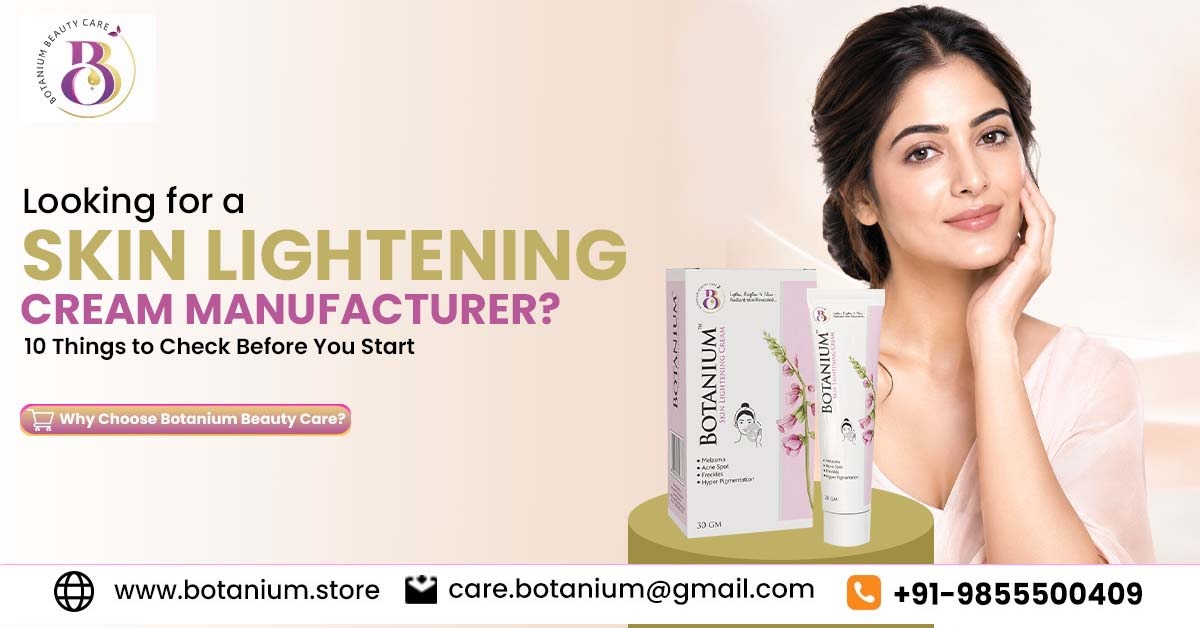
If you want to skip the cost of building a factory or hiring staff, working with a third-party skin lightening cream manufacturer in India makes perfect sense. In fact, most savvy skincare brands opt for this route. It saves you the cost of building a factory, compliance hassles, or hiring staff.
You just share your requirements with them to get your products made.
But not every derma manufacturer is created equal. Some are experts in simple moisturising formulations, some in advanced dermatological science. Some have ready-made formulas, meaning that they may not be able to develop your unique product. Choosing an inexperienced or unaccredited partner may result in product safety issues, legal penalties or serious damage to your brand image.
To safeguard your investment and grow a successful beauty business, you need to do your due diligence on potential partners.
Here is a full guide and 10 things you should check while choosing a cosmetic manufacturing company for skin lightening products.
How Big is India’s Skincare Contract Manufacturing Industry? (Key Stats)
- - India has a skin brightening products market worth INR 35,00 crore to INR 5,000 crore.
- - India has an INR 20,000 crore cosmetic contract manufacturing market.
- - Over 35% of overall cosmetics and skincare products are made by a third-party or contract manufacturer.
- - Skincare is the largest driver of personal care manufacturing in India, with a current valuation of INR 25,000 crore in 2026.
- - India accounts for 3.4% of the global personal care contract manufacturing market and nearly 10% of the Asia-Pacific market.
Why Choose a Skin Lightening Cream Manufacturer in India
India has become a top hub for cosmetic and skin care manufacturing, and the reasons are easy to see once you look closely.
Cost Effective Production:
India offer high-volume production at a fraction of global manufacturing cost without compromising with produce quality.
Compliance:
Reputed derma cosmetic manufacturing companies follow strict compliance standards, including WHO-GMP, ISO and AYUSH.
Custom R&D:
Many Indian skincare manufacturers can create unique formulas to your requirements. This is another reason why they are highly preferred by global skincare brands.
Wide Product Portfolio:
Indian skincare manufacturers can formulate virtually any skincare product.
How to Choose the Right Skin Lightening Cream Manufacturer in India
1. Check the Licences and Certifications
A good skin lightening cream manufacturer in India holds a valid cosmetic manufacturing licence. It is issued by the State Drug Authority of the state where the unit operates. Ask for the licence number and, wherever possible, verify it against the official state records before you choose them.
Beyond the basic licence, look for these:
- - WHO-GMP (World Health Organisation Good Manufacturing Practice)
- - ISO 9001 and ISO 22716 for cosmetics
- - GLP for the lab that tests the product
- - Halal or Cruelty-Free marks, if you plan to sell abroad
If you are planning to market your products internationally, make sure that the company complies with foreign regulatory guidelines such as the US FDA or the EU cosmetic regulations. This can cover FDA registration, COPP files, and label rules for each country.
A manufacturer with no papers is a warning sign. This is true even if their price looks great.
2. Ask About Their Formula Team
Brightening creams contain special actives that target hyperpigmentation, dark spots and uneven skin tone, which are not found in basic skincare products. These include niacinamide, kojic acid, alpha arbutin, liquorice extract, vitamin C, and mandelic acid. Ask if the manufacturer has its own formula team. Or do they just copy old formulas from other brands?
A strong formula team means more choice for you. You can ask for a lower strength, a fragrance-free version, or a mix made for sensitive Indian skin. Make sure they do not use banned or harmful ingredients like mercury, hydroquinone or steroids that have not been approved.
Ask about where they source their raw materials from. They should have COA (Certificate of Analysis) documents for the key ingredients. Any good skin lightening cream manufacturer in India will be completely upfront about their raw materials and active concentrations.
3. Check the Full Range of Products They Make
A manufacturer who only makes one cream may not be your best long-term partner. Most skin care brands launch new product types within a year or two. May be you need to look for a moisturising cream third-party manufacturer if your current company lacks that specialisation.
Therefore, choose one that makes a complete line of skincare products. It saves you the hassle of switching to another vendor in case you expand later. Also, it keeps your quality the same across every product. It means fewer vendors to manage as your brand grows.
4. Check Their Sunscreen Skills Too
Sun exposure can reduce the effect of a skin brightening cream. As a result, a consumer can experience pigmentation and dark spots despite regular usage.
This is exactly why most established brands now pair their lightening cream with a dedicated sunscreen, rather than treating it as an optional add-on. You can launch a combo pack to build a 2-step skincare regimen for your buyers. Moreover, it saves you the hassle of finding a sunscreen manufacturing company in India separately.
5. Ask About MOQ
Also check the Minimum Order Quantity, or MOQ. With big MOQs, you can have a lot of money invested in inventory. With smaller MOQs, production cost per unit might be higher.
Many units set MOQs from 500 to 5,000 units per item. If you are a new brand testing the waters, look for lower MOQs. This way, you do not lock up too much cash in stock before you know how it will sell.
You want a partner that can work within your operational terms, your budget and your business plan.
6. Consider the Packaging
Packaging shapes both cost and shelf appeal. In fact, it is often the first touchpoint between your brand and a customer. Above all, it protects the integrity of the formulation.
Active antioxidants such as Vitamin C and Glutathione are very sensitive to light, air and moisture. See if the manufacturer offers complete service packaging solutions such as airless pumps, UV-resistant jars, or special squeeze tubes.
Ask if they help with labelling as well. The cosmetic labelling is subject to strict regulatory requirements such as proper listing of the ingredient (INCI name), net weight, manufacturing details, expiry date, and directions for use.
A good partner will guide you through the label compliance process so that the end products comply with all local and export labelling legislation.
7. Review Their Quality Checks
A good derma product goes through several tests, including stability tests, germ tests, pH tests, and skin patch tests. Some also run trials to back up claims like "visible change in 4 weeks. These tests confirm that the product is safe for an end user. Ask for a Certificate of Analysis, or CoA, for a sample batch before you commit to a larger order.
8. Look at Their Derma Cosmetic Experience
Skin lightening sits between plain cosmetics and skin science. A firm with real derma cosmetic third-party manufacturing skill knows more about formula strength, ingredient mix, and label rules than a plain cosmetic unit does.
Ask how many derma brands they serve right now. A firm that offers derma cosmetic third-party manufacturing to skin clinics or PCD franchise brands has faced tough clients before. That track record works in your favour.
9. Compare Prices in Plain Terms
A low price can hide weak raw materials or skipped tests. Request a full cost breakdown. This should cover raw material, packing, labour, tests, and any brand support. A fair skin lightening cream manufacturer in India will explain each cost line to you in plain terms.
Inquire about payment terms too. How much is paid up front? What happens if a batch fails a quality check? These points matter more once you have already paid and production is under way.
10. Assess their Track Record and Market Reputation
See if they can share the names of past clients with you and, if you can, speak to one or two of them directly about their experience. Look at how long the firm has been running, and whether it has worked with brands close to your size before.
Review what clients are saying, browse case studies and read online reviews. If the non-disclosure agreements permit, ask the manufacturer for reference contacts of present or past clients. A good company has a clean track record of on-time deliveries, product stability and excellent customer service; this is a testimony to their professionalism.
Botanium Beauty Care is Your Trusted Derma Cosmetic Third-Party Manufacturing Company in India
We at Botanium Beauty Care are a top pick for skin care brands looking for a skin lightening cream manufacturer in India. We run a WHO-GMP unit to build a range of skincare products with quality ingredients. We are backed by our own labs and a formula team as well.
We offer a full private label service with low, flexible MOQs. We make a complete line of moisturisers, sunscreens, serums, and face washes. This lets brands build a full skincare range under one roof. Each batch goes through stability, germ, and skin patch tests. This gives new and old brands real trust before they go to market.
To learn more about our third-party skincare products manufacturing services, please contact us at +91-9855500409 or +91-9988500409.
Final Thoughts
Picking a manufacturing partner is a crucial decision you will make as a skin care brand. Take your time to review them on all key aspects such as certifications, MOQs, ingredients, market reputation, and experience. Visit the plant if you can. The right skin lightening cream manufacturer in India will feel like a true partner in your growth. It will not just feel like a firm filling out your order form.
Frequently Asked Questions
Q1. How much do you need to start a skin lightening cream brand with a third-party manufacturer?
It depends on your MOQ and pack choice. Many brands start with ₹1 lakh to ₹5 lakh for a first batch.
Q2. How long does it take to build a new skin lightening formula?
Custom formula work often takes 3 to 6 weeks. This includes stability tests before the product is ready to be made.
Q3. Is third-party manufacturing the same as private labelling?
Not always. Private labelling gives you a unique formula and brand look. Some third-party deals use one shared formula across many clients.
Q4. Do I need my own cosmetic licence to sell my own brand?
No. If you use a licensed third-party maker, you do not need your own factory licence. You will still need a trademark. In some cases, you may need a wholesale drug licence too.
Q5. What is the usual MOQ for a skin lightening cream?
MOQs often run from 500 to 5,000 units per item. This depends on the maker and the pack type you pick.
Q6. Can I get a sunscreen made along with my lightening cream?
Yes. A firm that acts as a sunscreen manufacturing company in India can make both under one deal. This makes shipping and stock much simpler.
Q7. How do I check if a maker is truly WHO-GMP certified?
Ask for their certificate copy and licence number. Then check it with the state drug body if you have any doubt.
Q8. What does Derma Cosmetic Third Party Manufacturing mean?
It means making cosmetic goods to a skin-science-grade formula. Clinics and skin brands often ask for this level of skill.
Q9. Can a new brand with a small budget still start a lightening line?
Yes. Many makers offer low MOQ deals and starter kits built just for new, small brands in the market.
Q10. Do makers help with label rules and compliance?
Most set-up firms give label help to meet Indian rules. This covers the ingredient list and the net weight mark.
Q11. How do I know if a formula is safe for sensitive skin?
Ask for skin patch test reports. Check if a fragrance-free or low-irritant version is on offer as well.